Scrapping Plastic Plates
An A2 reading lesson exploring how eco-friendly materials like banana leaves and sugarcane fiber replace single-use plastic to protect rivers and beaches in Thailand.
Scrapping Plastic Plates
An A2 reading lesson exploring how eco-friendly materials like banana leaves and sugarcane fiber replace single-use plastic to protect rivers and beaches in Thailand.
Title
Scrapping Plastic PlatesSeo_intro
An A2 reading lesson exploring how eco-friendly materials like banana leaves and sugarcane fiber replace single-use plastic to protect rivers and beaches in Thailand.
Reading Text
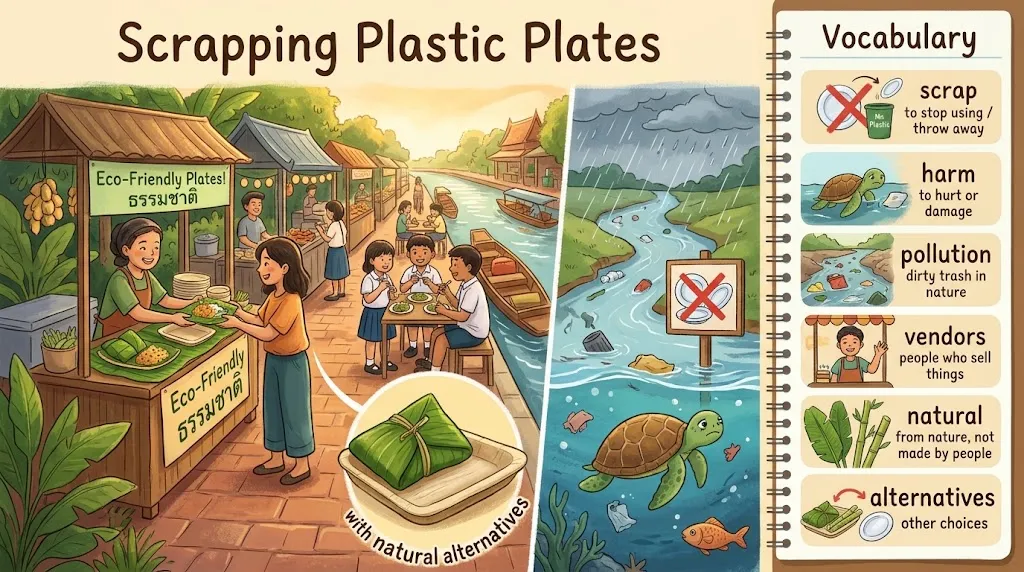
Many people in Thailand love street food, but single-use plastic plates and foam boxes cause big problems. When people throw them away, rain washes the trash into canals and rivers. Finally, this plastic waste reaches our beautiful beaches and oceans, where it can harm fish, turtles, and birds. To stop this pollution, people are starting to scrap plastic plates. Instead, vendors and markets use eco-friendly materials. A wonderful traditional choice is using fresh banana leaves to wrap food. Other sellers use plates made from sugarcane fiber, bamboo, or cassava. These natural materials break down quickly and do not stay in the soil for hundreds of years. By choosing green alternatives at school and local markets, we can keep our rivers clean and protect sea animals.
Activities
Vocabulary
- Label: scrapAnswer: def-1
- Label: harmAnswer: def-2
- Label: pollutionAnswer: def-3
- Label: vendorsAnswer: def-4
- Label: naturalAnswer: def-5
- Label: alternativesAnswer: def-6
- Text: to get rid of or stop using something
- Text: to hurt or damage an animal, person, or object
- Text: damage caused to water, land, or air by waste
- Text: people who sell food or goods, especially outdoors
- Text: made by nature and not created by humans
- Text: other choices or different options that you can use
- Before: Plastic bags in the ocean canAfter: sea turtles.Answer: harm
- Before: Many street foodAfter: in Thailand now serve meals in paper boxes.Answer: vendors
- Before: Our school decided toAfter: single-use cups and switch to reusable bottles.Answer: scrap
- Before: Banana leaves are aAfter: and clean material for wrapping sticky rice.Answer: natural
- Before: Throwing trash into the canal causes serious waterAfter: .Answer: pollution
Comprehension
- Text: Plastic waste in rivers can eventually reach the ocean.Answer: true
- Text: Banana leaves stay in the ground for hundreds of years without breaking down.Answer: false
- Text: Eco-friendly plates can be made from sugarcane fiber, bamboo, or cassava.Answer: true
- Text: Plastic plates and foam boxes are safe for marine wildlife.Answer: false
- Text: Choosing green alternatives helps protect local rivers and sea animals.Answer: true
- Answer: Plastic waste can harm ocean animals.
- Answer: Local vendors use fresh banana leaves.
- Answer: Natural plates break down very quickly.
- Answer: Rain washes trash into the rivers.
- Answer: We should scrap single-use plastic plates.
Written Expression
- Text: What eco-friendly materials can you use at home or school instead of plastic plates?
- Text: Why is it important to protect rivers and beaches in Thailand from plastic waste?
Example 1: At school, I can eat lunch from a reusable metal food container or use plates made from sugarcane fiber instead of plastic.
Example 2: It is important to keep our waterways clean so fish and sea turtles stay safe, and tourists can enjoy beautiful beaches.
Critical Thinking
If a night market near your home decides to ban all single-use plastic plates next week, what challenges might the vendors face, and how could the town help them?
Compare using fresh banana leaves with using manufactured plant-fiber bowls (like sugarcane or cassava). Which one is easier for food vendors to use daily, and why?
References
Recommended for You
Science (Biology): How Bats Protect Farm Crops
An A2-level English reading worksheet exploring how nocturnal bats help farmers by eating crop-damaging insect pests.
Strange Streaks on Halloween Night
An A2 reading story and worksheet about two children who notice mysterious glowing streaks across the sky on Halloween n...
The King and the Strawberry Garden
Read an A2-level story about kind Mrs. Green, her sweet strawberry garden, and a surprise visit from a king in disguise.